Creator Spotlight: Steve Saylor
Featured in today's Creator Spotlight is Steve Saylor, a multi-award winning Blind accessibility consultant.

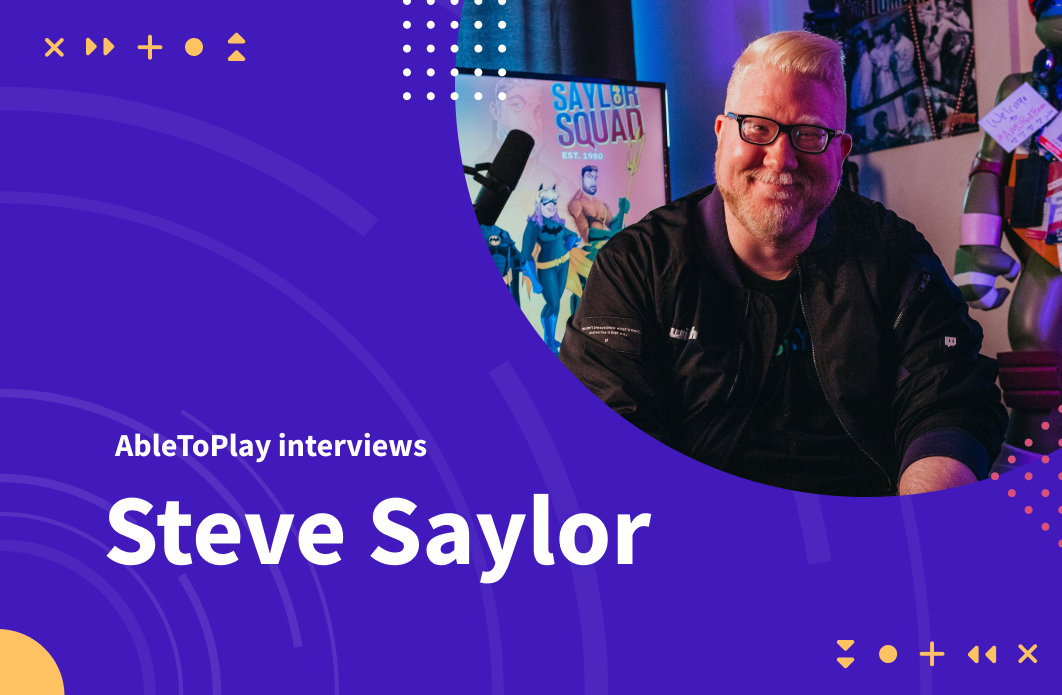
Tess: Hey, and welcome back to the Creator Spotlight, an AbleToPlay initiative where we celebrate amazing creators in the accessible gaming community! I’m Tess, and today we’re joined by Steve Saylor — a Blind accessibility consultant whose work has shaped some of the industry’s most beloved games, including The Last of Us Part II, Assassin’s Creed Valhalla, Call of Duty, and more! His expertise has also been featured in news outlets like the BBC, NPR, IGN, and Gamespot!
Steve, you’re a household name in the games accessibility community — it’s hard to find anyone who hasn’t heard of you! To start us off, could you share a little bit about your journey and how you became such a widely recognized and well-loved figure in the industry?
Steve: Hi! My name is Steve Saylor. I'm an advocate, consultant, and content creator in the video game industry for over 10 years! I am Blind and have an eye condition called nystagmus, which makes my eyes move uncontrollably. This makes my vision very blurry — I only see lights, shapes, and colors, which classifies me as legally blind.
When I was young, I thought I was just bad at video games. I played alone most of the time and avoided playing with others. It was frustrating to watch my friends and family play better than me, and I couldn’t improve. Years later, I realized I could help change things by speaking up for better accessibility in games. This led to opportunities to work with game studios to make games better for players with disabilities!
Now I work to make video games more accessible to everyone. I use YouTube, Twitch, and other platforms to raise awareness about game accessibility. I also speak to general audiences, game developers, and disabled players — which I love doing.
Tess: I hear that story a lot — disabled players choosing to play alone because they don’t want to feel like a burden to their nondisabled peers, or because they need to engage with the game in a way that’s more accessible for them, even if it isn’t considered the “normal” way to play. Were there other experiences that fueled your desire to get involved in games accessibility?
Steve: I got started with a YouTube series idea in late 2014. I was talking with friends who were either in the video game industry or played games a lot, and they had never seen me play video games.
During our conversation, I thought, "What if I showed them proof that I was bad at video games?" They thought it was funny. I immediately thought of making Let's Play videos on YouTube, so I called my series Blind Gamer. My niche was being a Let's Play player who is blind, and I would laugh at myself for how badly I played games.
I felt this approach made people feel more comfortable watching a disabled person play video games. Later, I was invited to a panel hosted by Ubisoft in Toronto, where developers from different studios attended. This was probably the first time I thought about accessibility from a game developer's perspective.
I initially thought I was just there as the YouTube gamer for the conference. That's when I had my epiphany — I didn't suck at games; it was that games sucked for me. After that, I was approached by a few people who worked at studios or worked in accessibility asking to help consult on their projects, and I’ve been doing that ever since.
Tess: The lightbulb moment where you realized games could be better! And your career speaks for itself. You’ve consulted on so many titles celebrated for their accessibility. Looking back, are there any particularly memorable experiences working with those teams that you could share?
Steve: Yes, I've had amazing experiences working with many different teams, but working with Naughty Dog on The Last of Us Part II really stands out. It was my first major consulting playtest. I had done some consulting before, but this was the first time I spent multiple days playing a game and giving full feedback while I played.
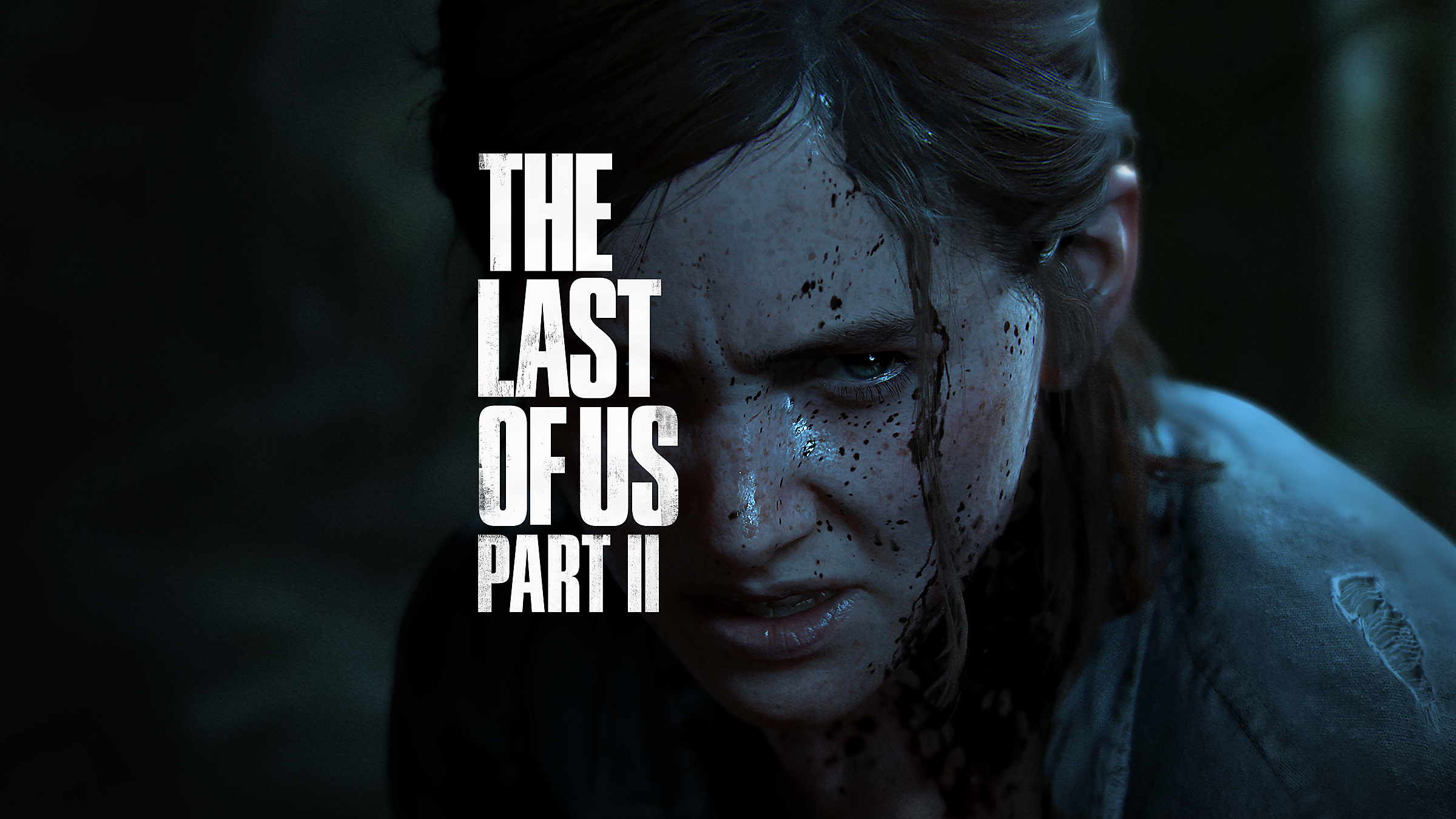
We only played a specific section in Seattle, which is a more open-world part of the game with some story elements. During the playtest, I accidentally discovered a major plot point from the beginning of the game. I won't share specifics to avoid spoilers, but when I realized what had happened, I was completely shocked. It took me about 10-15 minutes to calm down.
I think the Naughty Dog developers knew I would figure it out and they were watching my reaction. After I calmed down and started playing again, they had me play the museum scene. If you're familiar with The Last of Us Part II, this scene is similar to the emotional giraffe scene from the first game. In it, Joel and Ellie are in a museum on Ellie's birthday, enjoying things I loved as a kid — dinosaurs, space, NASA, and the moon landing.
Even though this scene appeared later in the final game, it felt like it was made just for me. It connected with so many of my personal interests and emotions. That was probably my most memorable moment working on the game. It wasn't even about accessibility — it just felt like that story moment was crafted especially for me.
Tess: I always say that games are another medium for powerful storytelling. It’s wild to think how far we’ve come as industry in such a short time, like Pong to The Last of Us Part II. Like you, I remember the emotional moments the most from The Last of Us Part II, and how deeply certain story points resonated. It was so impactful it became a global conversation, even inspiring HBO to adapt it into a live-action series.
As developers, we want people to resonate with the stories we tell. We can empathize with characters from different backgrounds because of the shared human experience of emotion. I feel like accessibility is the same; as advocates, consultants, and developers, we’re sharing our accessibility stories (or trying to) to create the same emotional resonance to raise awareness. The Last of Us Part II set a new standard by launching with a wealth of accessibility features, and even won the “Innovation in Accessibility” award at The Game Awards in 2020.
As a longtime accessibility advocate, what are your thoughts on the state of accessibility in the games industry?
Steve: I want to share an honest opinion here — or maybe a hot take.
I feel that when The Last of Us Part II came out, I believe the gaming industry wasn't ready for the level of accessibility features that game introduced. Many of us hoped it would be a turning point for accessibility in gaming, and in some ways, it was — and still is.
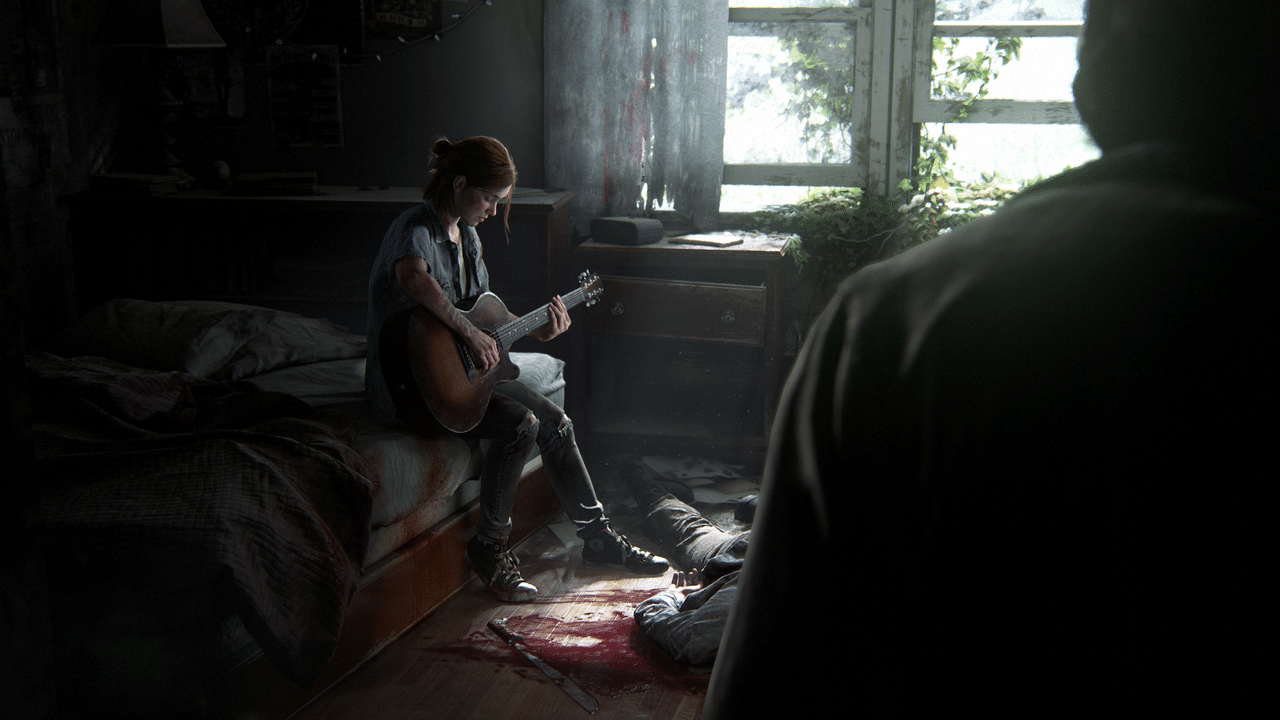
But most studios weren't prepared to match what The Last of Us Part II did because they didn't know how to properly implement accessibility features. Naughty Dog was ahead of everyone else in this area. They were like the canary in the coal mine, testing whether accessibility could survive a full AAA production. We expected the industry to quickly rise to that same level. Unfortunately, progress has been much slower than anticipated, which has created frustration in the disabled community.
Yes, we've seen positive innovations with accessibility tags, new input devices, and some breakthrough features in games. That's great progress, but we're still not where we need to be. We don't yet have widespread accessibility in games. Not every game includes accessibility features, and few games are fully accessible to many disabled players. Still, we are seeing some improvements, which is positive.
Things slowed down a bit after the pandemic "ended," but one encouraging trend is that studios that never considered accessibility before are now starting to include it. Since The Last of Us Part II, we've understood why accessibility matters, but we're still figuring out how to implement it well — and this process is taking longer than disabled players would like.
To keep moving forward, we need to continue giving feedback to developers and studios, emphasizing that accessibility is still essential. We must remain strong advocates, keep telling studios that accessibility matters, and encourage them to innovate. As we collectively push forward and continue improving, other studios will be inspired to follow.
Tess: Not at a hot take at all! Gamers themselves are paramount to developer feedback — they are the backbone of user research. And speaking of advocating and game reviews, a year ago, you launched a podcast called Gaming In Sight that covers the biggest gaming accessibility news stories. What made you want to start it?
Steve: I started Gaming In Sight as a way to talk about gaming news from a different perspective. Many YouTubers focus on negative, sensationalist coverage of news stories or give advice about game development without any industry experience. Unfortunately, these negative YouTubers became popular and are seen as trusted voices in the gaming industry.
There weren't many people covering accessibility news in gaming. Some websites like Can I Play That, Game Accessibility Nexus, and even IGN were covering it to some degree, but mostly in a blog or article format. I wanted to use my broadcasting expertise in a video or audio medium instead. So I wanted to create a podcast and YouTube channel that covers gaming news through the lens of accessibility.
I also wanted to bring a positive approach and provide better context for gaming news based on my experience working with developers and in the industry. While I'm still learning and not an expert in everything, I can offer a broader perspective and context on the video game industry. That's what I wanted to share, and that's why I started Gaming In Sight.
Tess: To your point, I’d add that game reviews and blogs — like this one, haha — aren’t always the best or only way to present accessibility information. Someone with ADHD might struggle to read a game review, but thrive in a video format, like Gaming In Sight. Video reviews play an important role in delivering information in an different way, giving users the option to read or listen. And to your credit, your channel is fun and exciting to watch! Many people in our community share your videos with enthusiasm and discuss the very topics you highlight. Because we love Gaming In Sight, I have to ask: what do you love most about it since you started it?
Steve: What I love most is the conversation happening in the comments section. Regular viewers share their thoughts on the day's gaming news from their own perspectives, which has been wonderful. I enjoy reading comments from people who give their opinions on games I'm playing — whether from previews or first impressions — and who discuss current gaming news from their viewpoint.
This engagement has been growing steadily. I'd love to see it grow even more, but I've really enjoyed watching these comments and seeing a small community form around the show.
Tess: And what do you hope your audience gets from it? Why should we tune in and listen?
Steve: There are several things I hope my audience takes away from the show. Mainly, I want to provide a positive space where people can learn about gaming news and trending topics in the industry. I aim to give deeper context to stories — for example, whether it's about layoffs and what's happening industry-wide, or the history of a studio and why these layoffs are occurring, or game releases and what can be learned of the accessibility of a game. Hopefully, in the future I’ll provide more previews of upcoming games where I can discuss accessibility. I also provide an accessibility perspective on news stories, both positive and negative.
I hope viewers gain a better understanding of what's happening in the gaming industry overall, as well as what's happening specifically with accessibility in gaming. Every gaming news story can be viewed from an accessibility angle. I want accessibility to become a normal part of gaming conversations. If you're looking for that kind of perspective, that's why you should tune in and listen.
Tess: You’ve also recently launched an exciting new project in the TTRPG space with Dungeons & Disableds, and it looks phenomenal! It’s clear you and your party are having a blast! TTRPGs are popular in gaming circles, but often overlooked in mainstream accessibility conversations. What do you enjoy most about role-playing on it?
Steve: Yes! I started a show last year called Dungeons & Disableds where disabled players come together to play tabletop role-playing games as disabled characters. We have a lot of fun telling amazing stories together.
What I love most about it is the chance to be creative. I used to write stories as a kid and teenager, and now I get to tell stories again — with the added benefit of collaborating with my players. They bring their real-life experiences and ideas to the game. I think it's really cool to see disabled characters having heroic adventures while still being disabled. That's what makes the show so special to me.
Tess: Embarrassingly, I’ve never participated in a Dungeons & Dragons campaign! I felt awkward joining one because I’m deaf, and there’s often so much overlapping conversations that I miss audio cues from other players. How do you make tabletop gaming accessible for yourself?
Steve: For me, it's about making storytelling games accessible to everyone. With Dungeons & Disableds, we include captions for Deaf or hard-of-hearing viewers and describe everything verbally instead of using physical game pieces or maps for Blind or low-vision viewers. We also release the show as an audio podcast for blind listeners.
We make sure our players are comfortable too. Some have chronic pain, fatigue, or other disabilities that make long gaming sessions difficult, so we break up our recordings into shorter segments.
We take frequent breaks, record sessions instead of streaming live, and we're flexible with scheduling. If someone needs a break or we need to reschedule because of disability-related issues, we can do so easily. These adjustments make the game accessible for both our players and our audience.
Tess: TTRPGs have really exploded in recent years thanks to shows like Critical Role. You clearly have a methodology for running Dungeons & Disableds and accommodating the players at your table, but looking at the wider TTRPG community, how do you think tabletop gaming be more inclusive and accessible?
Steve: I could talk about specific game mechanics or adaptive technology that would make tabletop gaming more accessible, but for me, the bigger issue is representation.
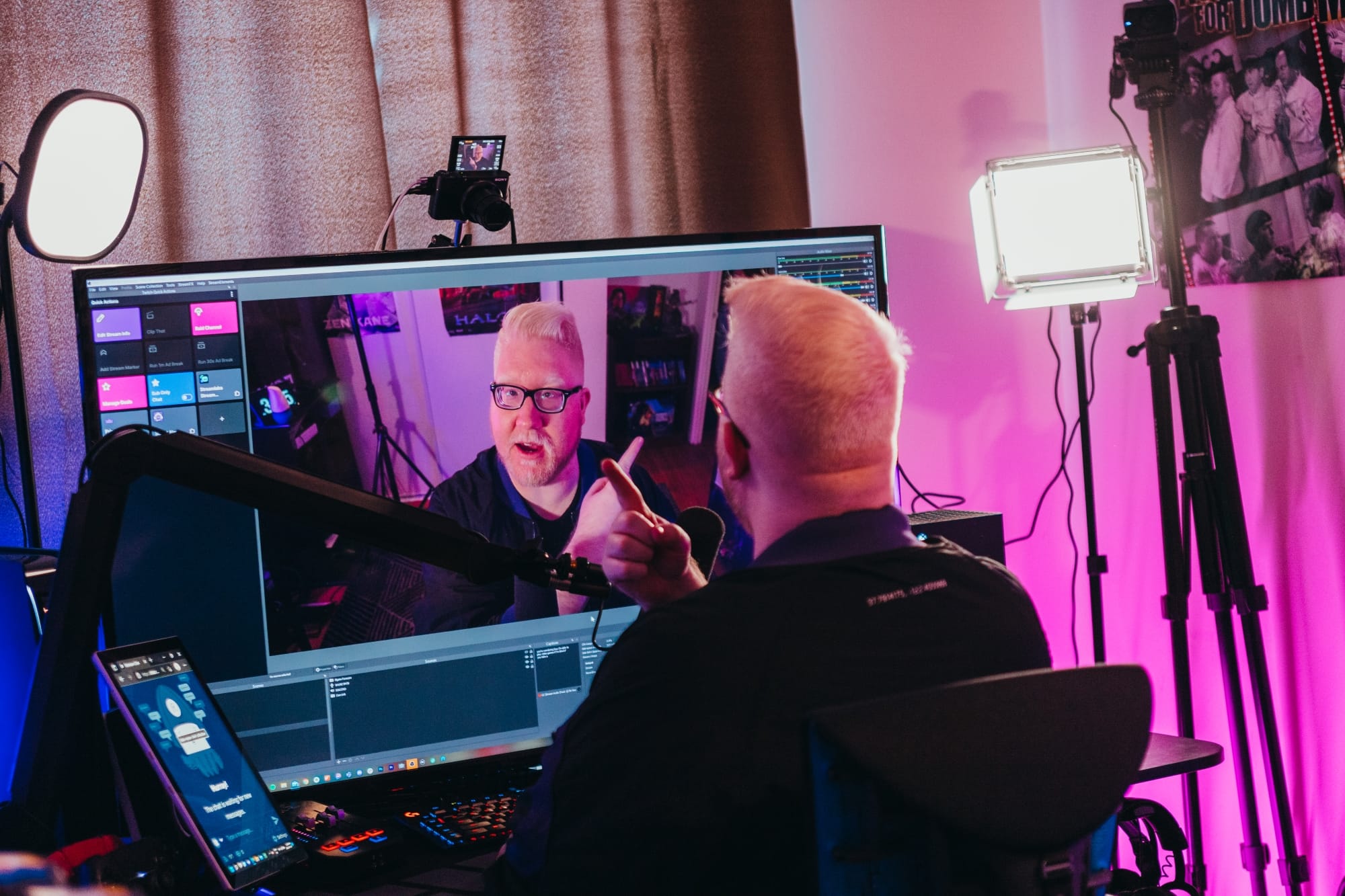
When you look at the top shows or actual players in this space, there is not enough disabled representation, even though there are amazing creators in the community. I want to see us showcase and highlight disability in fantasy storytelling — because accessibility goes beyond just adding ramps to dungeons. Disabled characters can be included in many meaningful ways, both in gameplay and storytelling. You can tell great stories that include disability without feeling like you're just catering to a specific audience. If you listen to our show and you're not disabled, you can still enjoy our stories just as much as someone with a disability — though disabled viewers might connect more deeply with characters who share their experiences.
I'd love to see more disabled players, game masters, and characters in tabletop games. The key is representing disabilities authentically without relying on stereotypes or making the disability the center of the story.
Tess: There was a great talk recently by Kennedie at the Games Accessibility Conference about what meaningful disabled representation looks like since disability is often presented as a tragedy. Players want to participate in the same rich worlds and storytelling as anyone else. And to quote Kennedie: “yes, disabled characters can even have romance!” It’s wild that some still assume disabled characters can’t be desirable or capable of the same emotional depth as their nondisabled counterparts.
Steve, thank you so much for joining me today. It’s been a genuine pleasure to chat and hear your reflections on the industry. And, of course, it’s exciting to see how Dungeons & Disableds will continue grow! How can people — developers, creators, and others — support you?
Steve: The best way to support me is by following my content. You can find my Gaming In Sight show on my YouTube channel @stevesaylor as well as my tabletop-centric streams on Twitch @stevesaylor. You can also find me and some short-form content on other platforms such as BlueSky and Instagram @stevesaylor or on TikTok @BlindGamerSteve.
If you're interested in my show Dungeons & Disableds, you can find it on any podcast platform, on YouTube, or visit dungeonsanddisableds.com. Following and subscribing is the best way to support what I do. If you're a studio, publisher, or other games company looking to tell the story of your brand's accessibility-focused values, look no further – you can contact me here.
And thank you so much for having me.
Nominate a Creator!
Is there a creator or streamer that you want to nominate for our community spotlight? Let us know! Join our Discord, where you’ll find a dedicated place to nominate new creators for our community spotlight.