Code Vein II - Accessibility Spotlight
CODE VEIN II, the spiritual successor to CODE VEIN (2019), promises epic battles, new companions, an open world, and a time-spanning story as you fight to reverse the sacrifices made during the Upheaval 100 years ago.

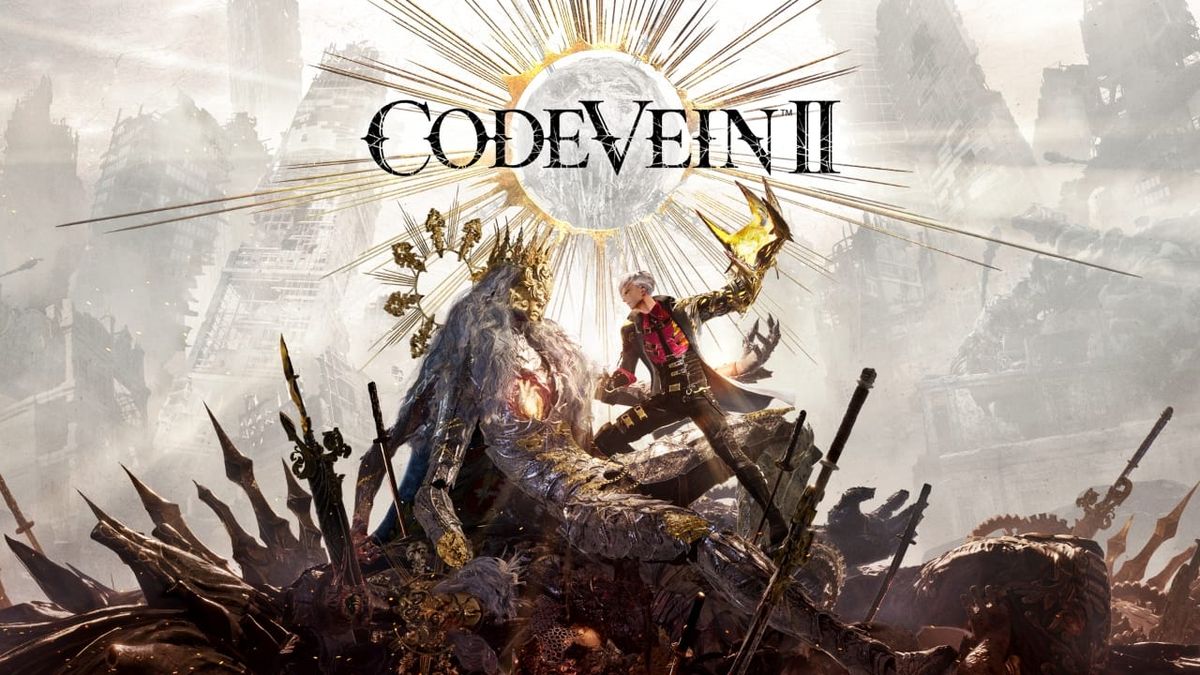
CODE VEIN II is the spiritual successor to CODE VEIN (2019); however, if you're looking for a direct continuation of that story, CODE VEIN II is a completely new story with no direct connection to the original beyond shared terminology, such as Revenants – vampiric fighters.
CODE VEIN II opens in the present timeline where the world has long been corrupted by an event known as the Resurgence, transforming all things into horrors. To combat this, Revenants were created to seal away the Resurgence. Now, the seal is weakening and the world is rapidly vanishing. Lavinia sends you and your companion, Lou, the only Revenant with the power to cross time, 100 years into the past. Your mission is to end the lives of former heroes who sacrificed themselves to strengthen the seal before they are lost to the corruption.
Visual Accessibility
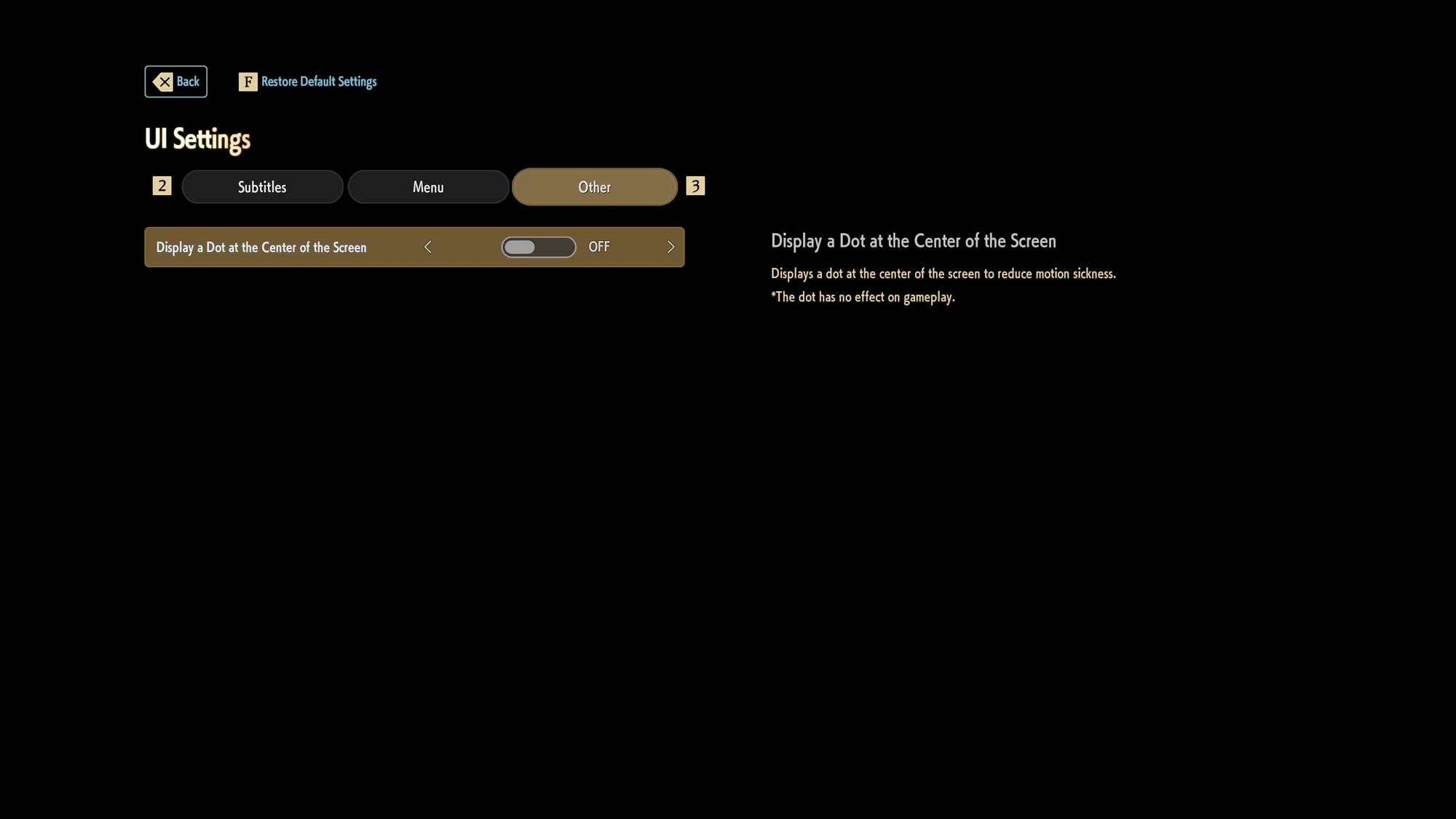
There are standard camera controls available, including the option to adjust depth of field and motion blur. A new, notable improvement over its predecessor is the addition of the persistent center dot.
As an open-world game, CODE VEIN II uses yellow contextual outlines to highlight collectable items, such as berries found in the wild. Non-wild collectables are also color-coded: blue for standard inventory items, purple for upgrades, and gold for important story items. Unfortunately, there's no way to change the color of any of these items. Still, the variation is helpful, especially in dungeons where you may need to decide whether a blue collectable is worth risking a room full of monsters.
It's also worth mentioning there is no option to tone down the uhmm... pronounced bustiness of certain characters. Several cutscenes frame this prominently. We feel it's important to mention this for players who may find it uncomfortable.
Mobility Accessibility
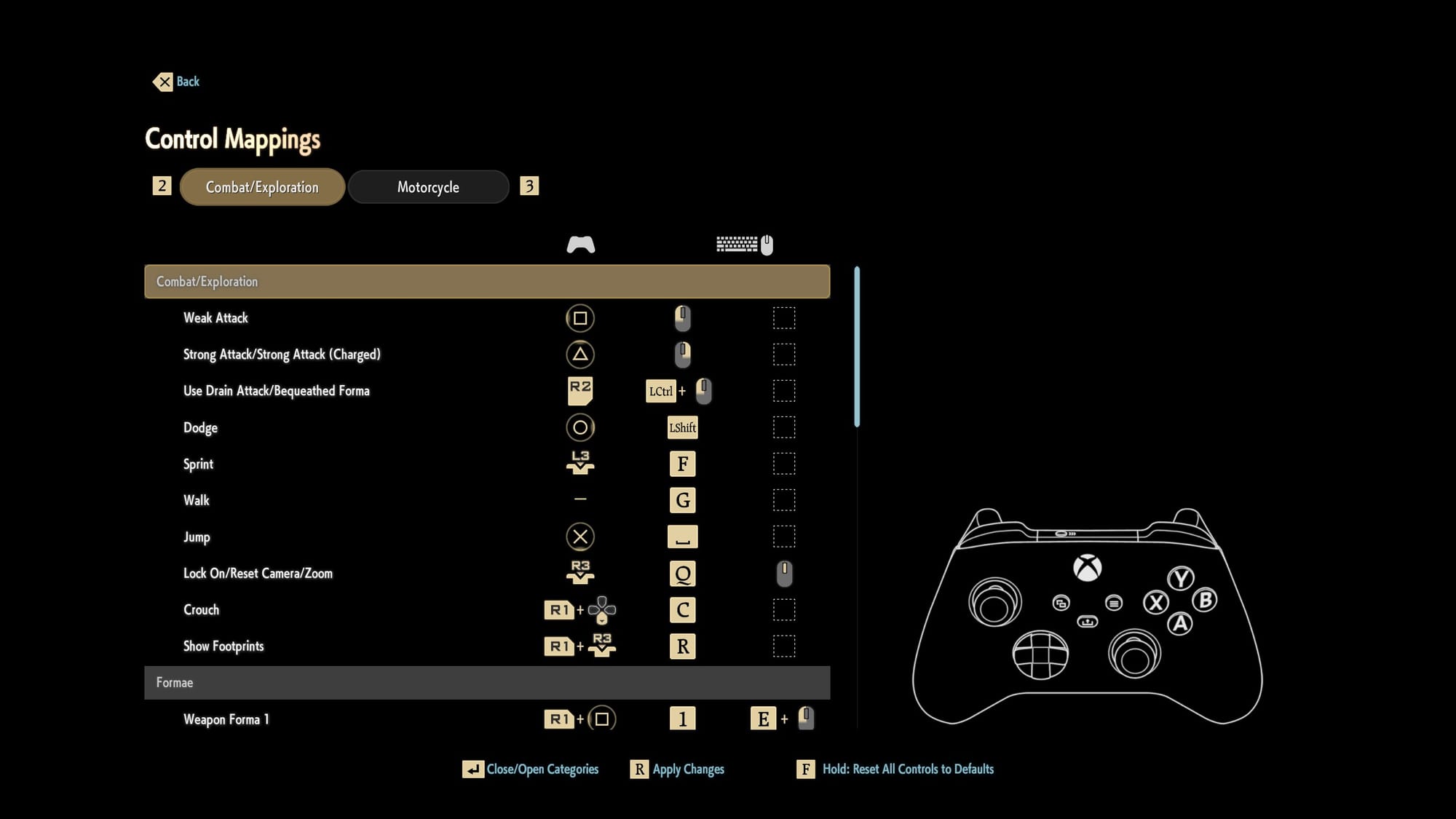
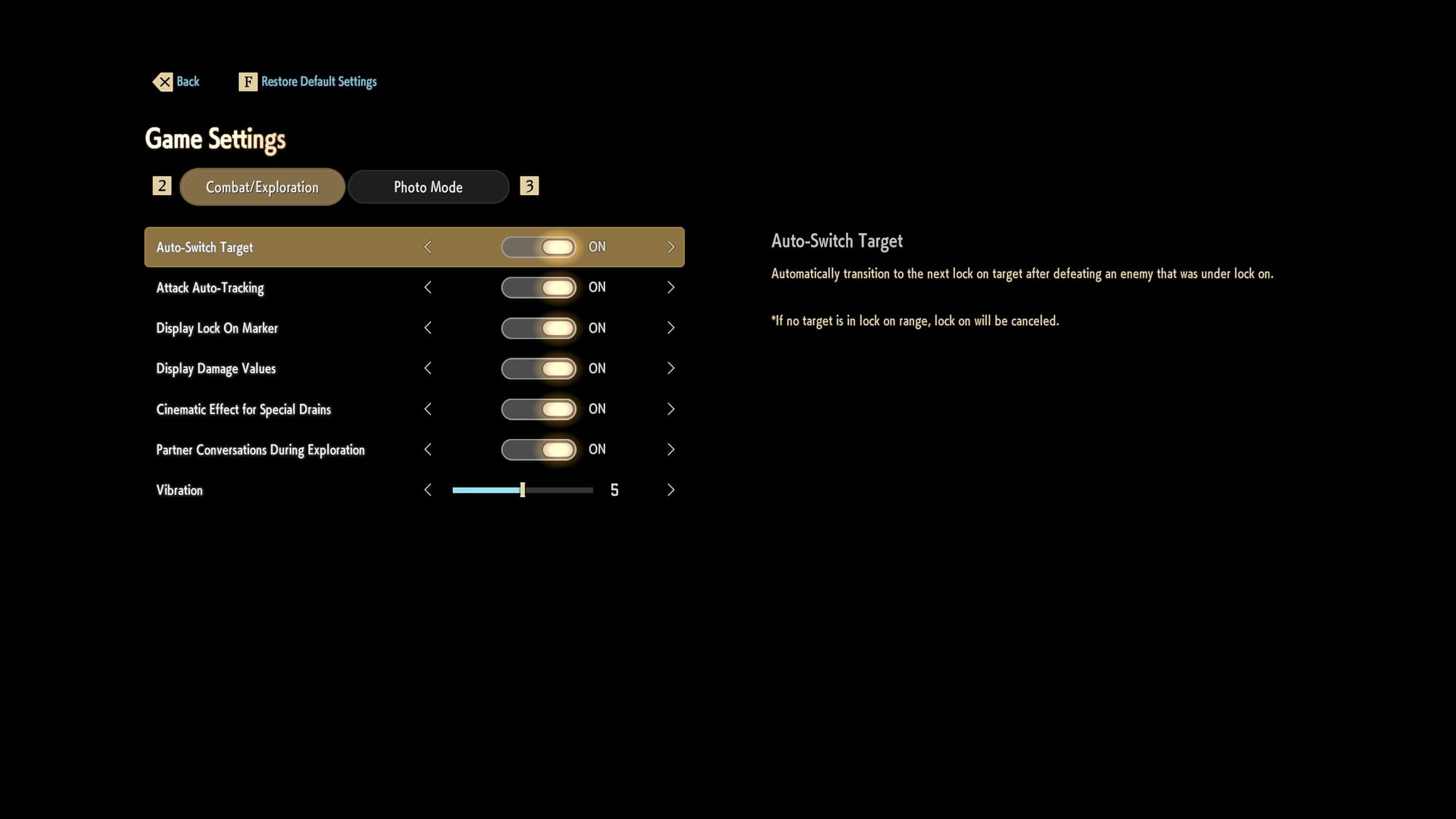
There is full controller remapping for controller and keyboard/mouse! Several combat toggle options are also available such as Auto-Switch Target after defeating an enemy, a highly appreciated feature in hairy fights involving three or more enemies. We experienced some difficulties with the camera and character movement like dodging when fighting enemies larger than the screen – which is common in this game. Disabling auto-lock is often the quickest way to avoid getting hit by large enemy AOE attacks, but doing so costs precious seconds in a genre that emphasizes timing.
CODE VEIN II © 2026 Bandai Namco Studios Inc.
We also experienced thumb fatigue, especially when running. By default, running requires pressing down on L3 (on the controller), which demands more force than standard button presses. Thankfully, the game grants you a shiny motorcycle shortly after leaving MagMell making the open-world traversal smoother. However, running is still required in dungeons and tighter areas where maneuvering a motorcycle is a headache.
Auditory Accessibility
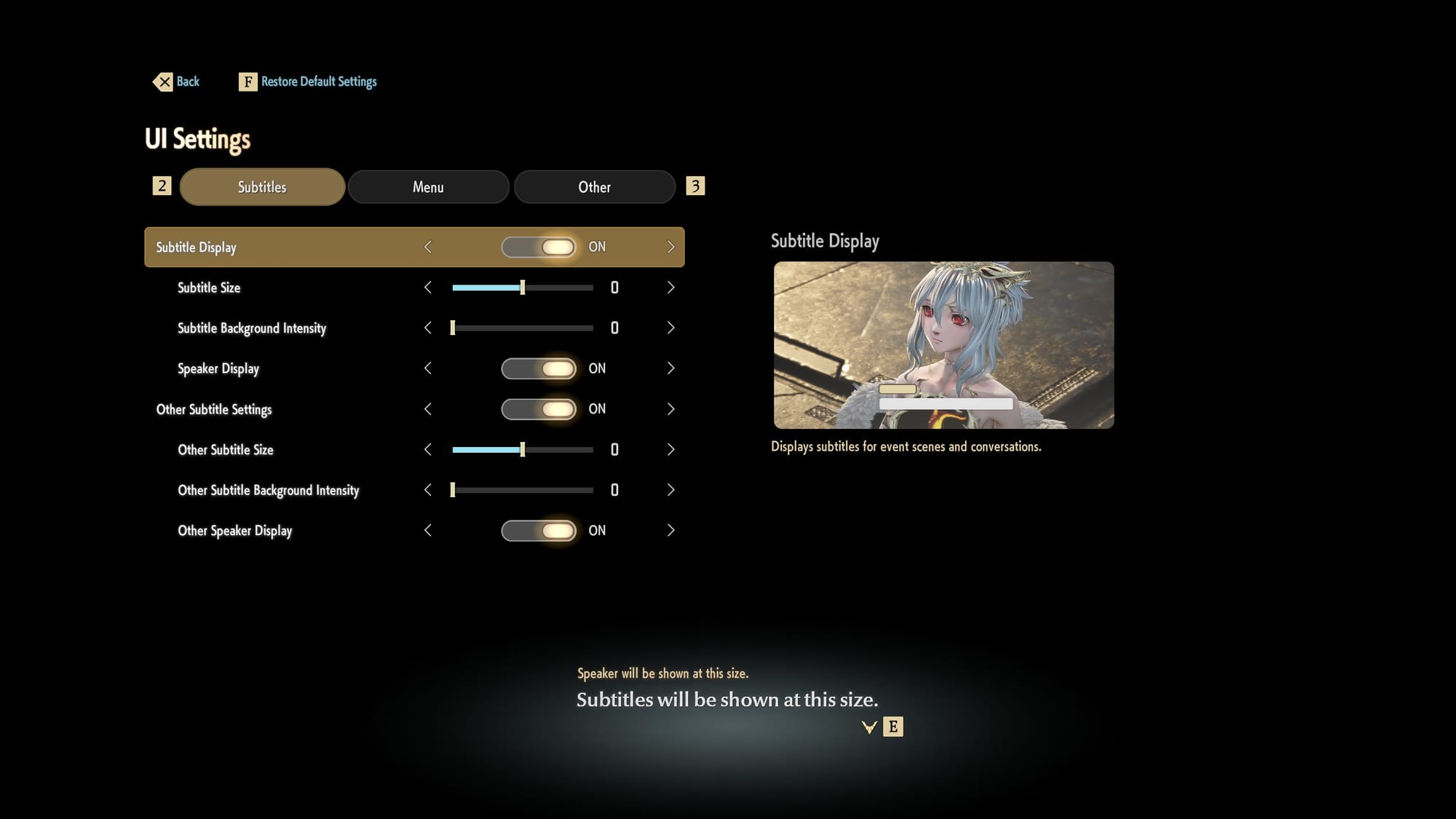
CODE VEIN II had the biggest jump in auditory accessibility compared to the first game! Subtitle options now include resizing text, adjusting background opacity, and displaying speaker tags. It also allows you to preview these changes directly in the UI Settings menu, allowing you to fine-tune preferences without repeatedly going back and forth between gameplay and settings. Being able to test accessibility adjustments directly in the settings menu goes a long way in reducing frustrating and saving time.
That said, even with the improvements from the first game, we noticed oftentimes companions will speak when traveling throughout the over-world. Although an icon indicator appears on their NPC avatar in the corner when they're talking, it's easy miss – especially during combat, which can be frustrating if important lore or character insights are played while you're focused on fighting. There is no way to replay missed dialogue short of disabling it, and companion commentary occurs randomly.
Cognitive Accessibility
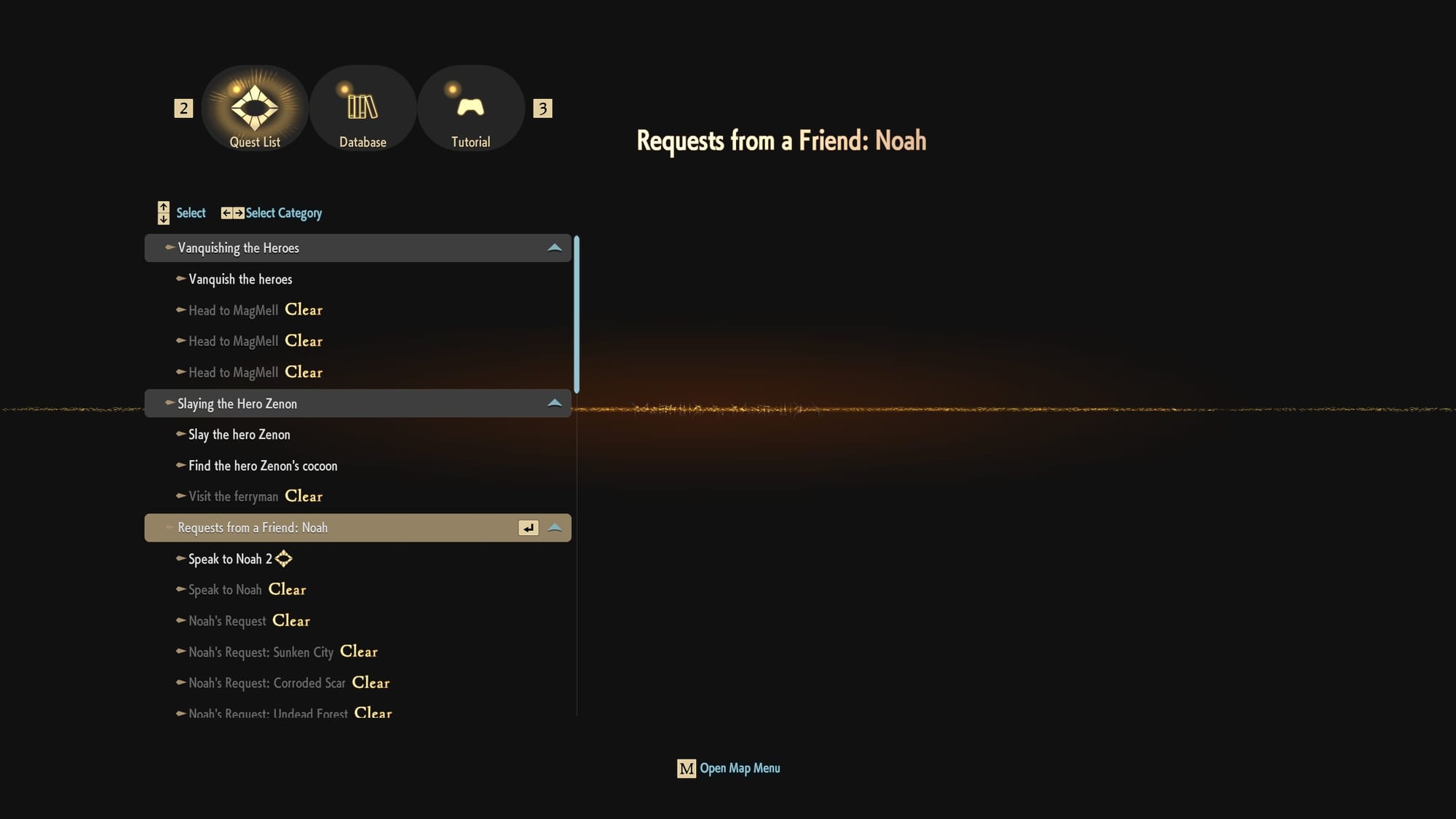
As an open-world game, CODE VEIN II improves on quest tracking and navigation. All required quests are accessible through the Quest List and include descriptions. The quest locations are marked on the world map, making objectives easy to locate.
Similar to The Legend of Zelda: Breath of the Wild, the map is initially grayed out and must be unlocked by locating red, glowing trees in each region. These trees appear as red circles on the grayed-out map, providing guidance so you're not wandering around aimlessly. The map also has displays Prayer icons, which grant various boons to your character when activated like extra health, stamina, dexterity, etc.. These are worth hunting for. Additionally, small blue dots mark the locations of Golden Nectar, which is essential for increasing the number of potions you carry.
You can also place custom pins for landmarks or areas of interest, which then show up on your compass for seamless navigation. Fast travel is also available between any Mistle (functionally similar to bonfires) location that you've activated, making old areas convenient to revisit.
The game also offers a comprehensive database and a tutorial section that can be accessed at any time, especially if you took a break from the game and need a refresher on the mechanics.
Mental Health
CODE VEIN II is posited as a tragic game. As a traveler from the future, you are sent back in time to save individuals before they become monstrous in the original timeline. Along the way, you form bonds with characters you know will eventually become twisted versions of themselves. You must end their lives. The game frequently reminds you of your origin, making every farewell bittersweet.
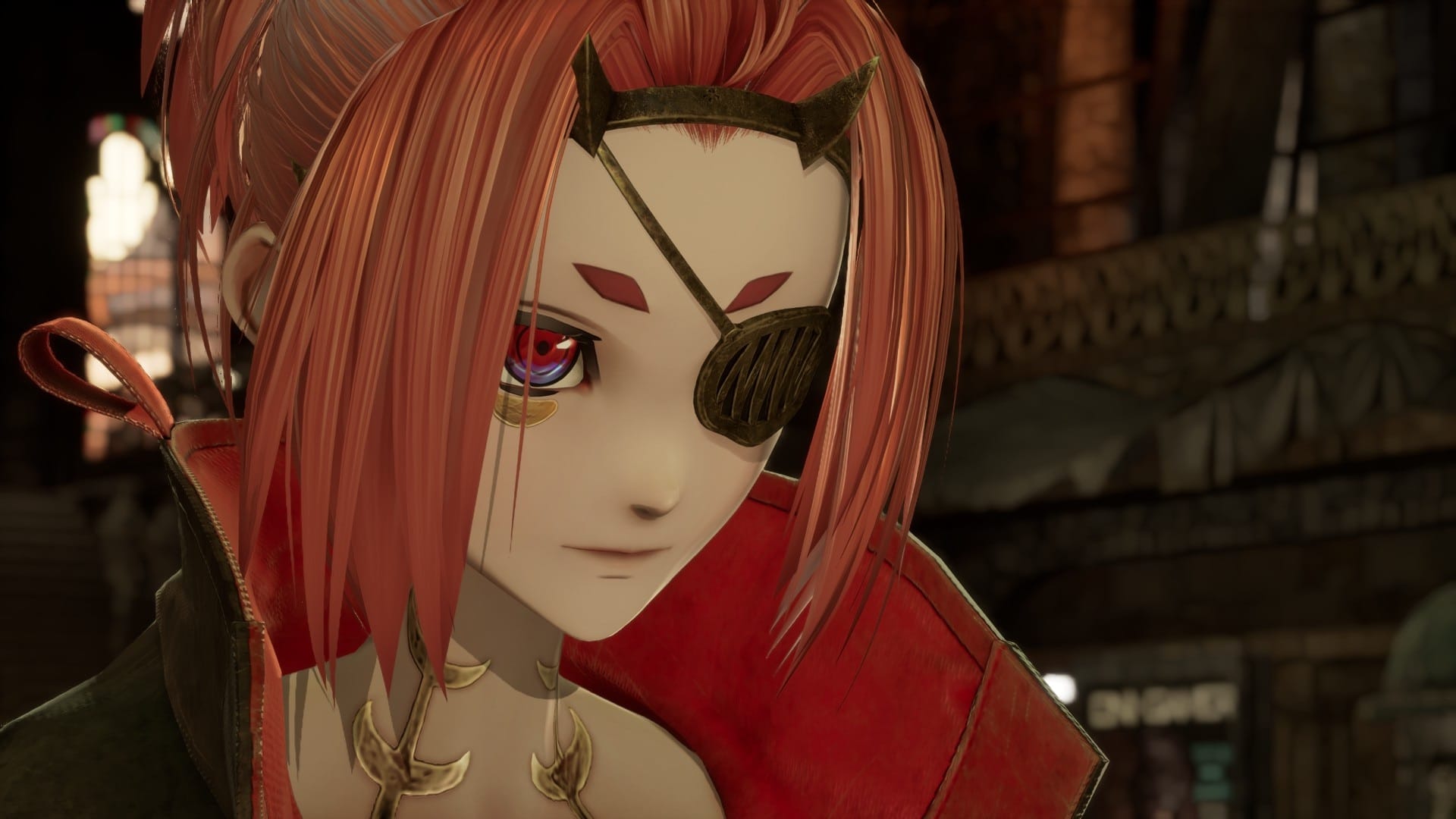
One notable difference from its predecessor is the change in rating. The original CODE VEIN was rated M; CODE VEIN II carries a T rating. There is less overt blood, but there are still frequent moments of exaggerated fanservice. Some character designs are uncomfortable, particularly when ages are ambiguous, like Josée Anjou, who is canonically hundreds of years old, but maintains a childlike appearance and wears minimal clothing. It is clear she has a romantic interest in the player.
Conclusion
Overall, CODE VEIN II definitely improves on its predecessor in terms of accessibility, but there are still several quality-of-life updates we'd like to see, such as customizable subtitle colors, adjustable collectable colors in the over-world, and a dialogue log to replay missed character comments.
Where the game struggles more noticeably is in its storytelling. Having played the first entry, we found its narrative stronger and more cohesive, likely due to its linear structure. CODE VEIN II's open-world format results in a more formulaic "go to Point A, then B, then C" progression. The time-travel plot feels somewhat heavy-handed, and certain elements of the story feel underdeveloped as if there were late-stage writing changes or cut content. That said, CODE VEIN II is still a complete experience capable of delivering 50+ hours of gameplay.
Unlock More With Your Personal Score™
Wondering how well CODE VEIN II might work for your specific accessibility needs? The AbleToPlay team has your back!
Create your free account today to get your Personal Score™ for CODE VEIN II and thousands of other games. AbleToPlay matches you to games based on your unique accessibility needs and preferences, helping you make informed gaming decisions before you play – for free.
Check out all the accessibility features in CODE VEIN II and see your Personal Score™ now!